


When people book a room repaint, the ceiling is usually the first thing offered up to save money. It is out of eyeline, it is more work than it looks, and it is genuinely possible to leave it.
Sometimes that is the right decision. Sometimes it quietly spoils the result you paid for. The difference is easy to establish before you commit.
The Test That Settles It
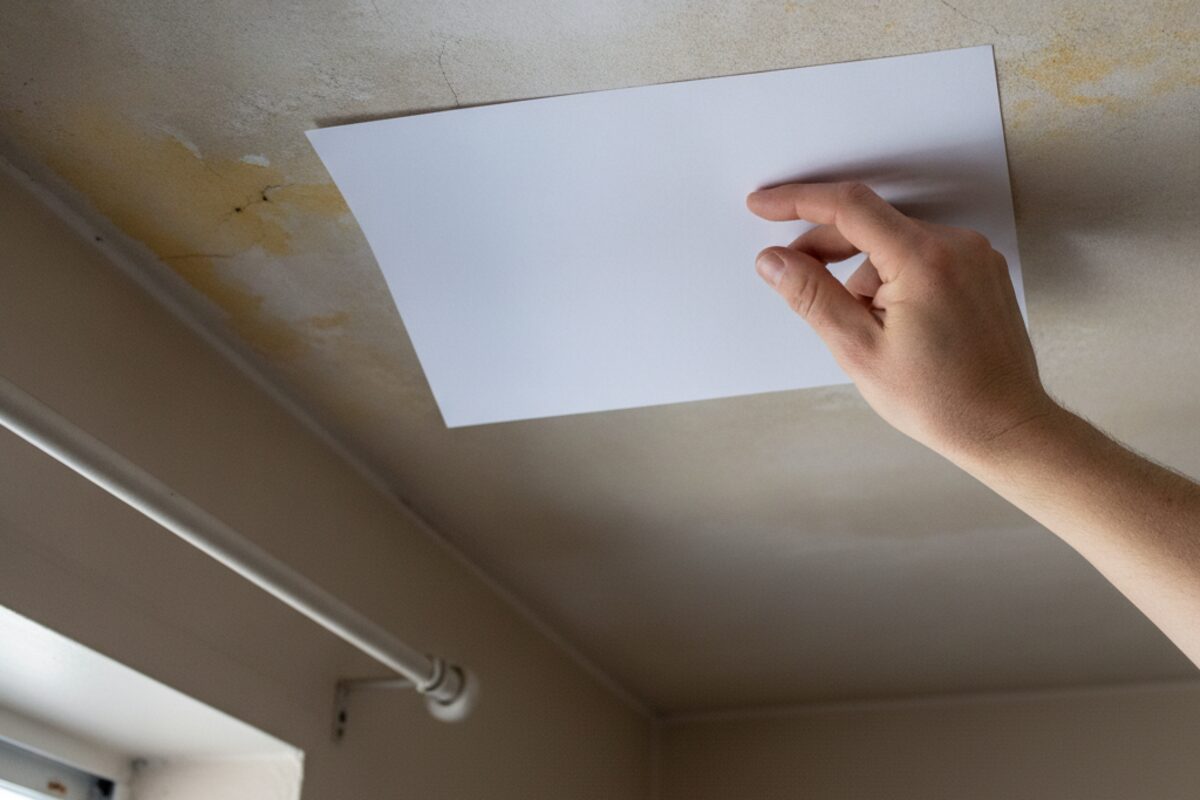
Hold a sheet of white printer paper flat against the ceiling, in daylight, and look at the two together.
If the ceiling reads as clearly yellow, grey or dull against the paper, it has aged — and it will go on reading that way next to fresh walls, only more so. If it still looks close to the paper, it has held up, and leaving it is reasonable.
Do this in the room you actually intend to paint. Ceilings age at very different rates depending on light, heating and what has gone on in the room.
Why Fresh Walls Make a Tired Ceiling Obvious
Whatever was on the walls before has been ageing alongside the ceiling, and your eye has been calibrating the two against each other for years. Everything matches because everything has drifted together.
New paint resets one half of that relationship and not the other. The wall goes bright and clean, and the ceiling — unchanged — suddenly reads as dingy in a way it genuinely did not the week before. Nothing has happened to the ceiling. It has simply lost the comparison it was getting away with.
This is why "the room looks unfinished and I cannot work out why" is such a common reaction to a walls-only repaint.
When Skipping the Ceiling Is Fine
Plenty of the time it is genuinely the right call:
- The ceiling is recent and still passes the paper test.
- You are changing the walls by a small margin — a similar tone, a slight adjustment. Less contrast, less exposure.
- The room has high or vaulted ceilings where access is a significant part of the cost and the ceiling is in good condition.
- Budget is the constraint and you would rather do the ceiling properly next year than rush both now. That is a sound decision, not a compromise.
When It Is a False Economy
- The walls are going much lighter or much brighter. Maximum contrast against an aged ceiling.
- Kitchens, bathrooms and laundry rooms. Cooking and moisture deposit a film on ceilings that walls get wiped free of. These age fastest and most unevenly.
- Anywhere a woodstove or candles have been used, or where anyone has smoked indoors historically.
- There are stains. Old water marks, patches, or a repair that was never properly finished.
That last one matters more than people expect, and it is worth being specific about.
Stains Need Sealing, Not Covering
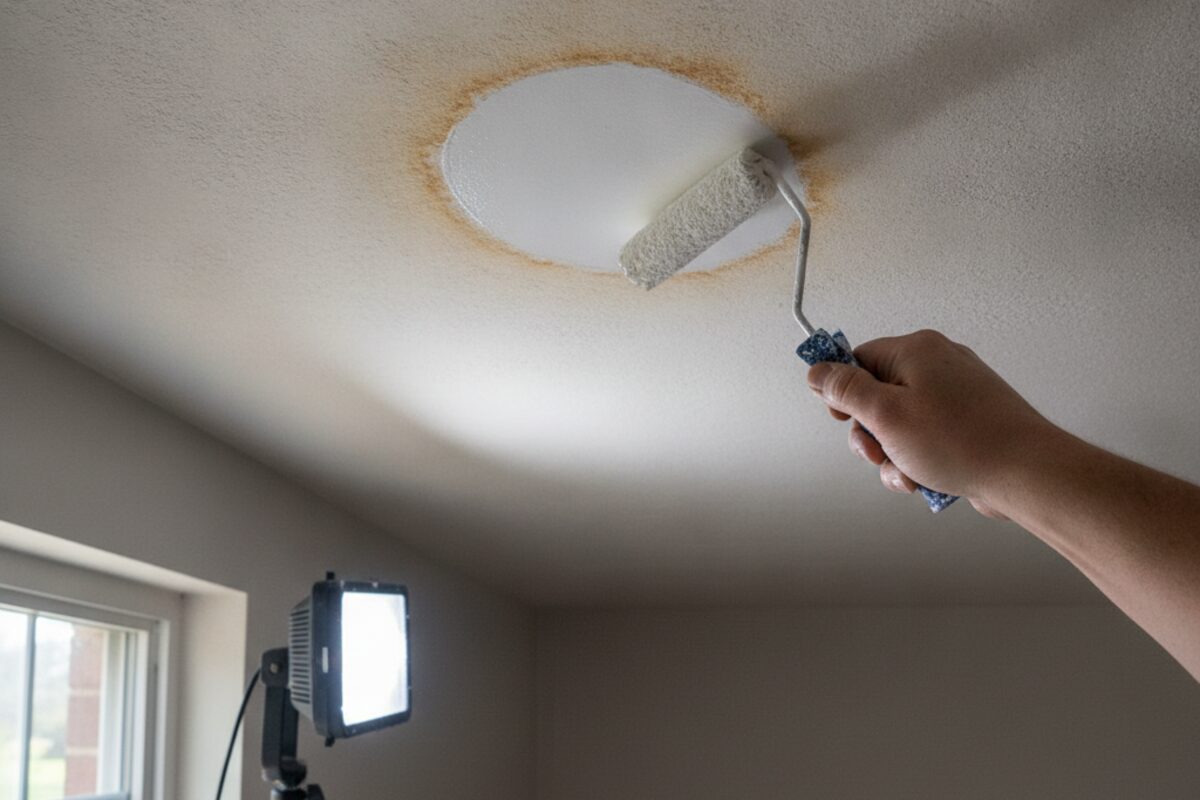
A water stain on a ceiling will bleed straight back through fresh paint, sometimes within days, no matter how many coats go on. The tannins and residues move through standard paint.
The fix is a stain-blocking primer over the affected area first, and then the finish coat. Anyone who proposes simply putting two coats of ceiling paint over a brown ring is going to be back, or more likely you will be looking at the ring again by Christmas.
There is also a prior question: why is the stain there? A dry, old, fully resolved leak is a finishing problem. An active one is not. Painting over a live leak buys you a few weeks and hides the evidence you would want if it gets worse. If you are not certain it is resolved, find that out before anyone opens a tin.
What It Changes About the Quote
Worth knowing so the number makes sense:
Ceilings take longer per square metre than walls. The work is overhead, cutting in around the perimeter is slow and exacting, and the whole room needs protecting from spatter rather than just the floor edges.
They also usually want a dedicated ceiling paint — a flat, low-sheen finish that hides imperfection rather than highlighting it. Sheen on a ceiling shows every roller mark and every undulation in the drywall, which is precisely what you do not want overhead.
And if the ceiling is textured, say so early when getting quotes. Textured surfaces absorb substantially more paint and behave differently under a roller, and it is the single most common reason a ceiling quote comes in higher than someone expected.
The Short Version
Do the paper test. If the ceiling clearly fails it, and the walls are going lighter, paint it — otherwise you will see it every time you walk in. If it passes, or if the change on the walls is modest, leaving it is a perfectly reasonable way to spend your budget where it shows.
If You Want It Looked At
We handle ceiling painting alongside interior painting across Barrie and Simcoe County, and we will tell you plainly when a ceiling does not need doing.
If there are stains involved, mention them when you ask — it changes the preparation, and it is better in the quote than discovered halfway through. Request a written quote.


