


Most people decide between paint and stain on appearance. It is a reasonable instinct and it is the wrong first question, because the two protect wood in completely different ways — and, more importantly, they fail in completely different ways.
Choosing between them is really choosing which maintenance job you want in five years.
The Actual Difference
Paint sits on top. It forms a continuous film across the surface. That film is opaque, it blocks a great deal of UV, and it gives you any colour you like. Because it is a film, it also seals the wood — which is exactly the property that makes it excellent until the moment it is not.
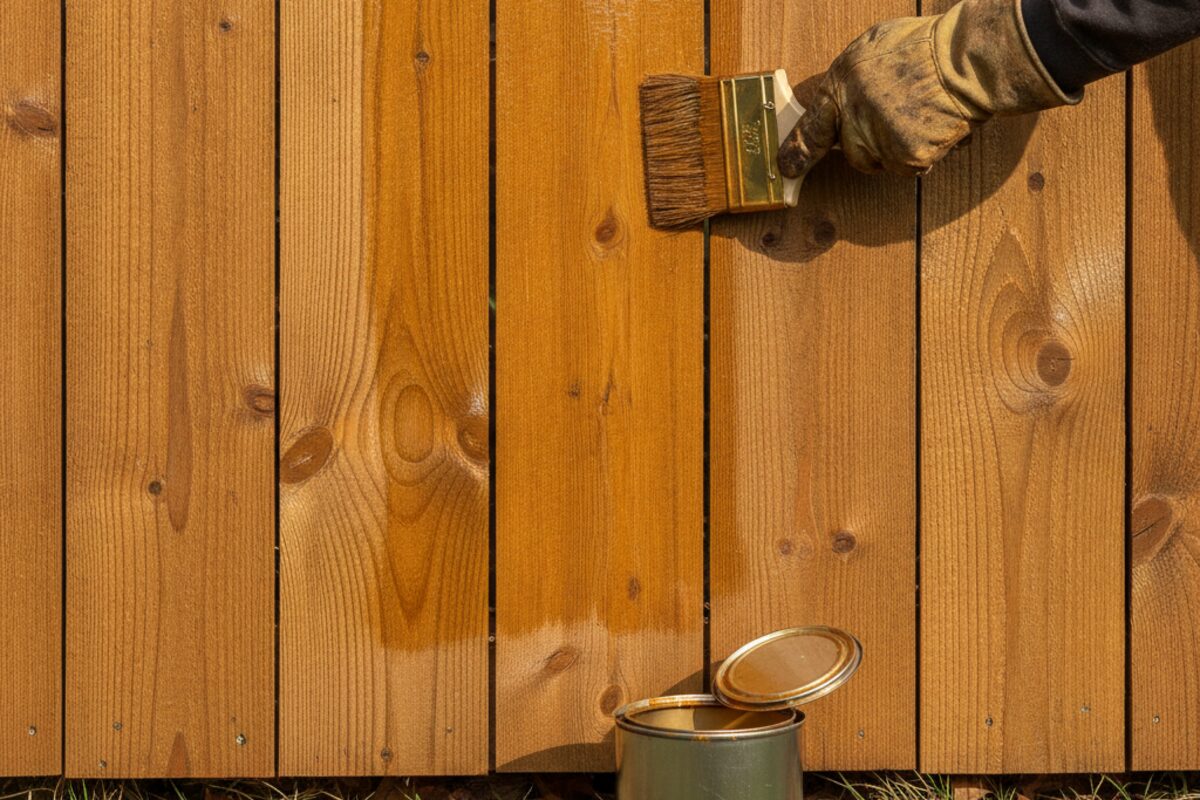
Stain soaks in. A penetrating stain carries pigment and binder down into the surface of the wood rather than bridging across it. It does not build a skin, so there is nothing to crack, and the grain stays visible.
That single structural difference drives everything else.
How Each One Fails
This is the part worth understanding before you commit, because it determines the work you are signing up for later.
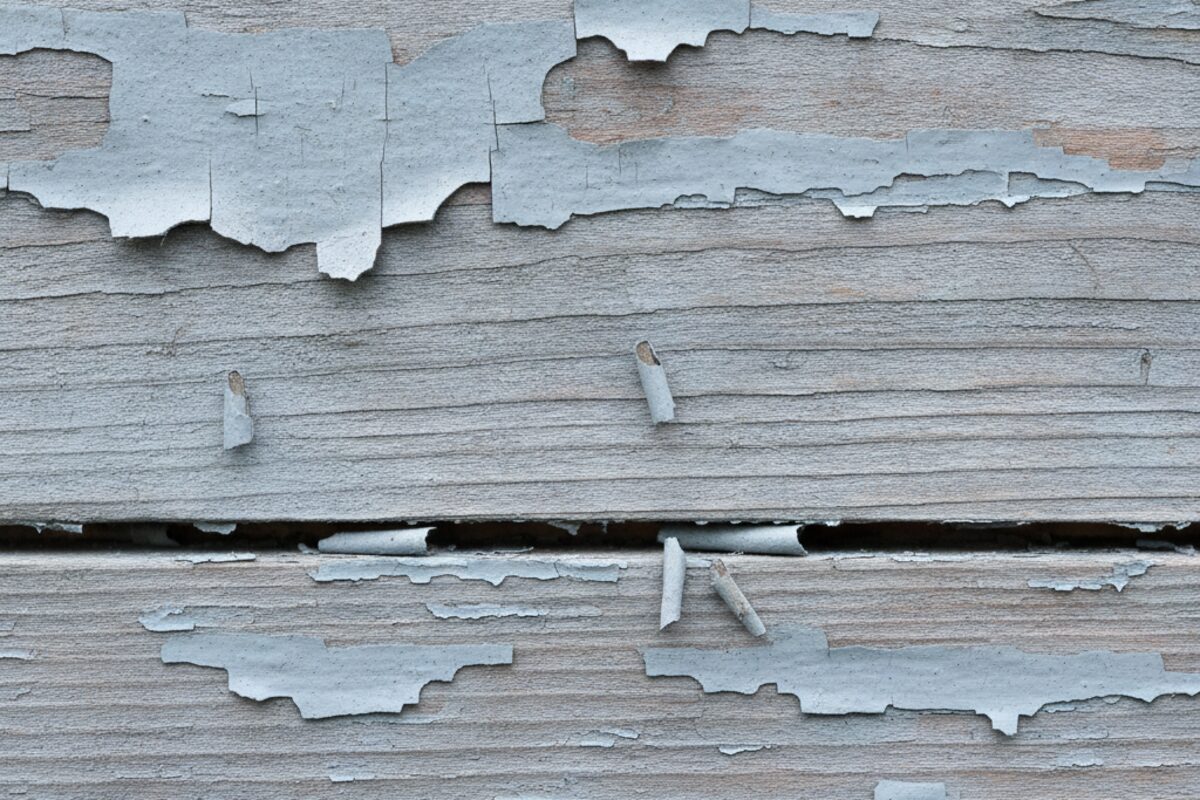
Paint fails by peeling. A fence moves. Wood takes on moisture and gives it up again with every change in weather, and it swells and shrinks as it does. A rigid film over a moving substrate eventually loses adhesion somewhere — usually at the end grain, the bottom of the boards, or wherever water sat. Once moisture gets behind the film, the film also slows it drying back out, and the failure spreads from there.
Repainting then means dealing with what is already there: scraping, sanding back sound edges, spot-priming bare wood. You cannot simply recoat over peeling paint and expect it to hold.
Stain fails by fading. It thins, it weathers, it goes patchy on the sun-facing side first. What it does not generally do is peel, because there is no film to lose its grip. Recoating usually means cleaning the fence and applying more, without stripping anything.
So the honest trade is this: paint gives you a longer interval and a harder job at the end of it. Stain asks for attention sooner and makes that attention easier.
Which Suits Your Fence
Stain is usually the better fit for a cedar or pressure-treated fence, which is most fences around Barrie. It suits wood you want to still look like wood, it copes well with the movement a fence goes through, and it is far more forgiving if maintenance slips by a season.
Paint makes more sense when the fence is already painted — going back to bare wood is a serious job — or when you want a specific colour, particularly to match trim, doors or a garage. A painted fence can look excellent. It simply needs to be kept up.
A few situations call for a decision rather than a default:
- Already-painted fence. Stripping to bare wood so stain can penetrate is usually not worth it. Maintain the paint.
- New pressure-treated wood. It often needs to dry out before it will take any finish. This is the single most common reason a new fence looks bad a year later.
- Bottom boards sitting in wet ground or snow. No finish solves a drainage problem. Fix the contact with the ground first.
Is There Still Time This Year?
In Barrie, late September is the edge of the season and the answer depends more on overnight temperatures than on how the afternoon feels.
Benjamin Moore's exterior guidance gives the working range for painting in "temperatures ranging from 35ºF to 100ºF and when humidity is as low as possible." It also makes a point that catches people out: "The surface you're painting has its own temperature, which may differ from the ambient, or air temperature." A shaded fence board on a cool morning can be considerably colder than the forecast.
The rule that matters most in autumn is the dew point one. The guidance is to "paint on a surface whose temperature is more than 5 ºF above the dew point—the temperature at which water droplets begin to condense." On a clear September night around here, dew forms readily, and a coating applied late in the day can still be curing when the moisture arrives.
In practice that means: start mid-morning once the surface has warmed and any dew has burned off, stop with hours of daylight left rather than pushing until dusk, and check the overnight low rather than the daytime high. Product labels vary, so the tin is the authority on its own minimum.
If the overnight numbers are marginal, waiting for spring is a legitimate choice. A finish applied in poor conditions can fail early enough to cost you the whole job twice.
Preparation Decides the Outcome
Whichever you choose, the finish only performs as well as what is underneath it.
A fence needs to be clean and genuinely dry. Mill glaze on new smooth boards can stop stain absorbing properly. Old flaking coating has to come off rather than be coated over. Anything green or mossy on the shaded side needs treating, not covering.
This is the least visible part of the job and the part that decides whether you are doing it again in two years or in eight.
If You Would Rather Not Guess
We do fence painting and fence staining across Barrie and Simcoe County, and we will tell you honestly which one your fence is a candidate for — including when the answer is to wait until spring.
If you are weighing it up alongside a deck or other exterior work, it is usually worth quoting together. Get in touch for a written quote.


